GEO Summit 2026: Key Takeaways from “Life After Blue Links”

Estimated reading time: 4 minutes
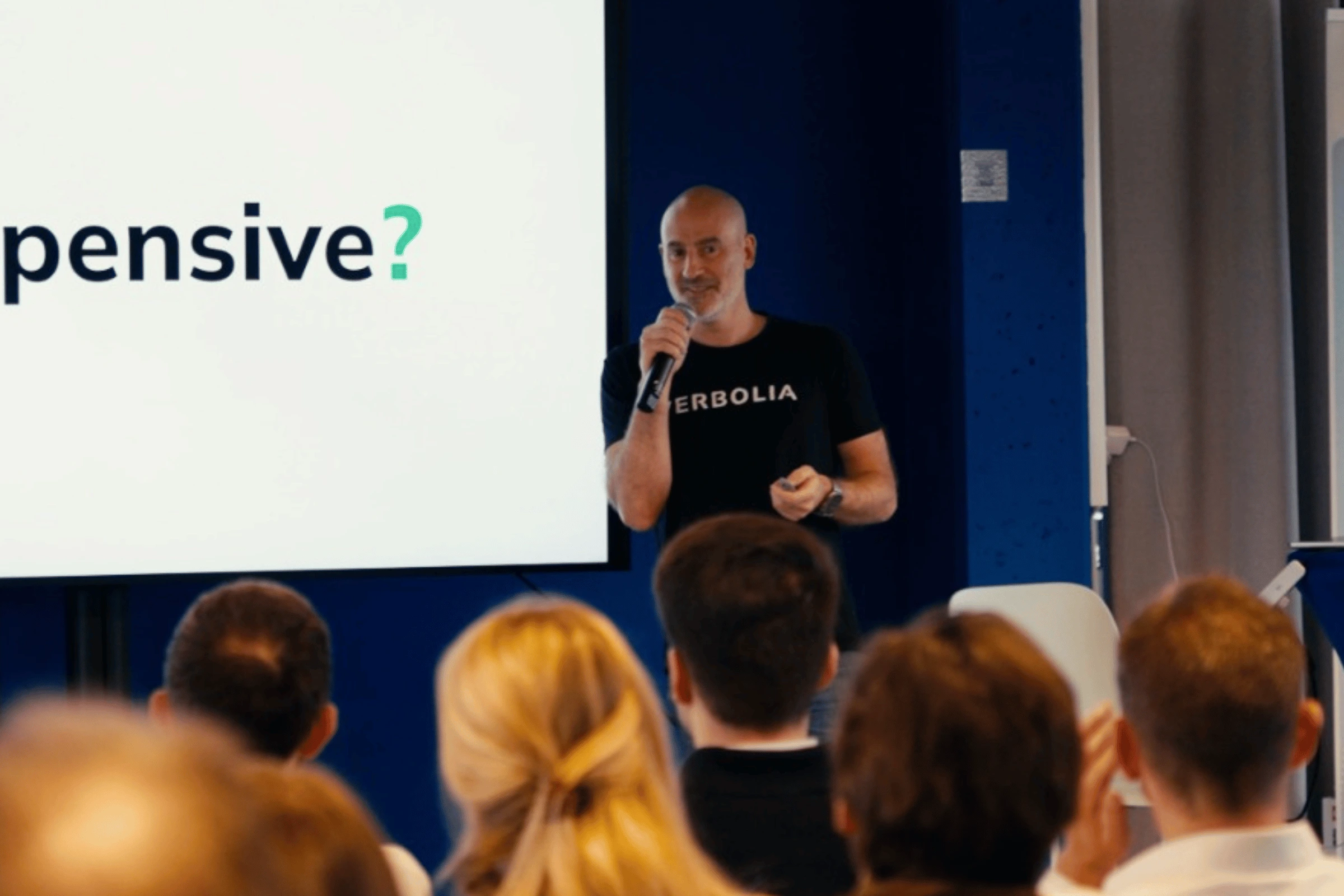
On June 11th, the Belgian search community gathered at The POD in Louvain-la-Neuve for the GEO Summit, an event organized by Semactic. It felt like the day traditional “blue links” suddenly showed their age which is why the invitation featured the provocative title: “Life After Blue Links”.
Behind the jargon lies a harsh reality dropped right at the start: as mentioned during the Shoptalk Europe conferences, one-quarter of the workforce uses GenAI for research, and 91% of GenAI users use ChatGPT, which demonstrates ChatGPT’s dominance in the market.
For an e-commerce director, the question is no longer whether AI will change the game, but rather: how do we stop our traffic curves from collapsing? Will GEO (Generative Engine Optimization) bury SEO?
Don’t panic, they are going to have to coexist. But the rules of the game just changed radically.
If there’s one punchline to take away from the summit, it’s this:
“SEO is what you say about yourself. GEO is what others say about you.” – Mikaël Priol, founder at netlinking.fr.
Until now, your job was to optimize your pages to hijack Google’s top spot. Tomorrow, the challenge will be controlling the narrative. If ChatGPT or Perplexity are talking about your product category, you need to make sure they cite you, and with the right arguments.
The catch? You can’t trick an LLM (Large Language Model) by just stuffing keywords down its throat. This is where technologies like Verbolia take on their full meaning: to feed these AIs, you need to deploy massive, ultra-clean data structures. By creating perfectly optimized landing pages at scale, you give the bots exactly what they love to scan and digest.
What’s actually going on inside Gen AI’s brain
To crack the GEO code, you have to understand that AI doesn’t think like a classic search engine. It’s probabilistic, not deterministic.
In plain English: its sole purpose is to predict the “most probable next word.” That’s why asking the same question twice will never yield the exact same answer. Add to this the fact that AIs increasingly personalize responses based on the user’s history (for sessions lasting an average of 6 minutes), and the window of opportunity for your brand is massive… provided you show up in those first generated words.
Forget your old SEO habits: here is the new roadmap
While GEO still builds on the foundations of search, it requires a major shift in strategy. At the GEO Summit 2026, experts shared the key adjustments you need to make right now:
- Frequency beats position: Being “number one on Google” is becoming secondary. What matters is recurrence. You need to be cited everywhere, all the time, by the AI to maximize your Share of Voice.
- Topical authority wins over volume: AI loves ultra-specialization. A surprising fact shared at the summit: just ten ultra-well-structured and interconnected pages can be enough for ChatGPT to grant you expert status in a niche.
- Time is of the essence (and that’s good news): Unlike traditional SEO where you have to wait months to see the first results, a solid GEO strategy shows measurable effects in less than a week.
- The local card needs to be played right now: AIs tend to source a lot of foreign sites. In French-speaking Belgium, 29% of cited sites come from abroad (and 35% in Flanders). For local e-commerce players, there’s a massive gap to fill before international giants take over the space.
Verbolia recently shared the practical changes you have to apply on your ecommerce site in terms of content and technique to appear on gen AI answers.
The new KPIs and methodologies you need to track closely
Forget simply tracking keyword rankings. To drive your ROI in the GEO era, there are new metrics making their way into your reports likeGPT Reach. GPT Reach is the percentage of queries or media sources where your brand is explicitly mentioned inside ChatGPT.
Because AI answers are volatile, measuring just once is useless. This is where the “Reach x Stability” method comes in: you need to cross-reference a high volume of different prompts (to cover the topic) and repeat the queries to ensure your brand remains solidly anchored in the algorithm’s stable responses.
The Decathlon case study: when smart automation hits the jackpot
To prove that this isn’t just consultant theory, Pierre-Olivier Danhaive (CEO of Verbolia) took the stage with numbers that turned heads in the room: a spectacular 95x ROI generated for Decathlon on their SEO/GEO investment.
Their secret? Face to face with AIs scanning the web at lightning speed, manual content creation just doesn’t cut it anymore. Decathlon used Verbolia’s Programmatic SEO & GEO technology to automatically yet qualitatively generate thousands of perfectly interlinked pages.
This is no longer content created to please a rigid algorithm; it’s a network of structured data that LLMs love to scan, understand, and ultimately recommend to users.
So, what’s the game plan now?
The end of blue links isn’t the death of Search; it’s simply the era of automated reputation. What the AI reads about you elsewhere now matters just as much as your own technical on-site optimization. For e-commerce players, the challenge is real, but the tools to intelligently automate this visibility already exist. A huge shoutout to Semactic for bringing this to the table at The POD and opening our eyes to what’s coming tomorrow.
About The Author

How can Verbolia help your e-commerce platform.